Specialty cable engineering — Kunshan, China
Cables engineered for depth, motion and time.
Neutrally buoyant umbilicals, tethered aerial power lines, watertight optoelectric links and continuous-flex industrial cable — designed around the working condition, not a catalogue section.
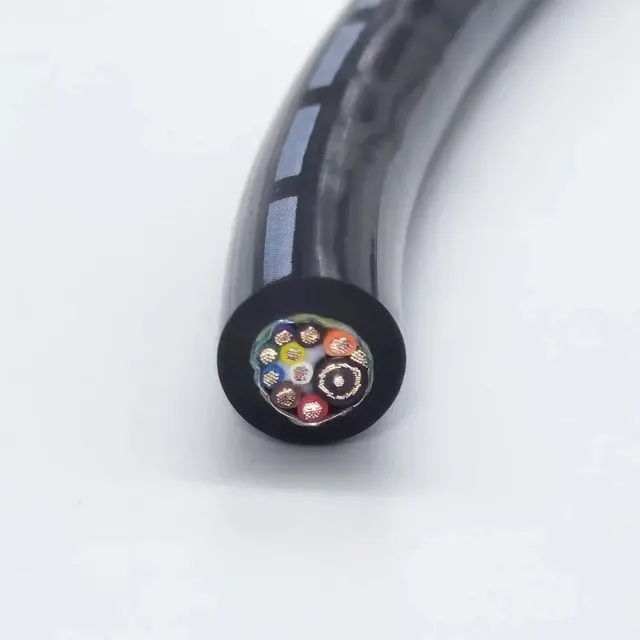
What we make
One engineering team, three environments.
PAIDE builds cable for places where a standard product stops being adequate: below the surface, in the air on a tether, and inside machines that never stop moving.
The same design logic runs through all of them. Work out what the cable has to survive — pressure, tension, cycles, temperature, chemistry — then choose conductor, insulation, screen, strength member and jacket together, because each one constrains the others. Founded in Kunshan, Jiangsu, and supplying overseas since the export business began.
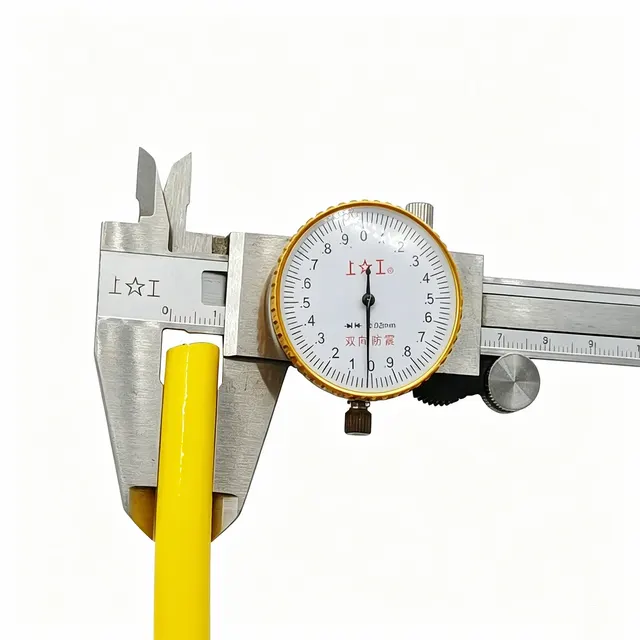
01 — Product index
Fourteen families, one index.
Every construction below is a starting point. Sections, core counts, screening, jacket compound, length and termination are specified per project.
02 — Capability
From requirement to tested assembly.
Design, cabling, extrusion, screening, overmoulding and test under one roof — which is what allows a construction to be changed for one project.
Construction design
Each cable starts from the working condition: depth, pressure, tensile load, bend radius, cycle count, temperature and the connector at each end. Conductors, insulation, screening, strength member and jacket are then selected together, because they constrain each other.
Conductor and cabling
Bundled and concentric stranding, lay length control and unit grouping. Power, signal and fibre units are kept in defined positions in the core so crosstalk, stripping and termination stay predictable.
Screening and strength members
Aluminium foil with drain wire, tinned copper braid at specified coverage, and aramid or HMPE strength members sized to the load case. The strength path is kept mechanically separate from the electrical cores.
Extrusion and jacketing
TPU, PUR, PE, PVC, FEP and silicone jackets, including foamed layers for buoyancy. Wall thickness and concentricity are controlled because they set both the water resistance and the finished diameter.
03 — Series
Where the cable has to work.
Marine & Subsea
Cable systems that live in salt water: power, control, signal and fibre for vehicles, sensors and structures below the surface.
Tethered Systems
Lightweight hybrid tethers for drones, aerostats and elevated platforms: power up, data down, over a single load-bearing line.
Industrial Automation
Continuous-flex cables for machines that move: drag chains, robot joints, hoists, elevators and inspection robots.
Accessories & Connectors
The parts that decide whether a cable survives the installation: grips, lacing, wet-mate connectors and terminations.
04 — Selected constructions
Recent references.
Model numbers are the ones customers specify. Each page carries the full construction, dimensions and options.
ROV umbilical cable 4x24AWG+2x2x26AWG+1x26AWG+2x1SMF+D-635KG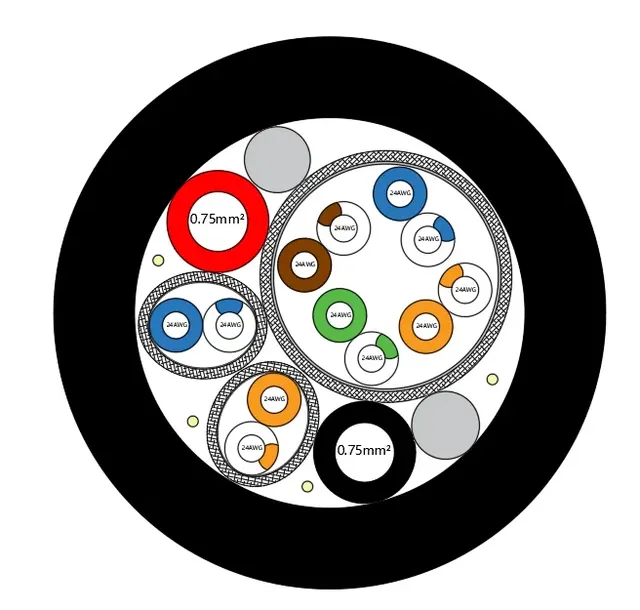 PDK81301
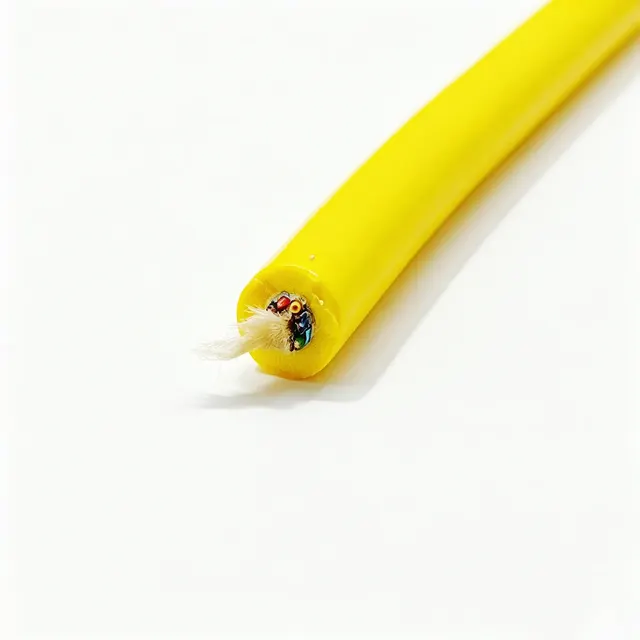 ROV cable 4×24AWG+2×2×26AWG+1×26AWG+2×1SMF+D-635KG
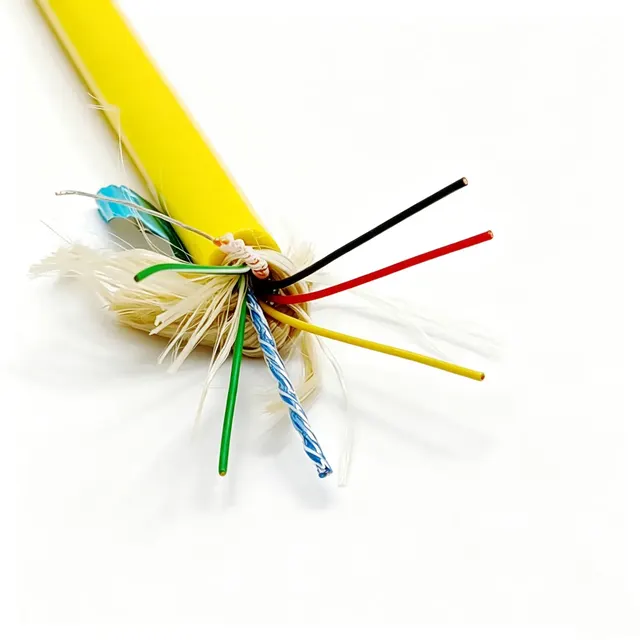 4×24AWG+2×2×26AWG+1×26AWG+D-635KG
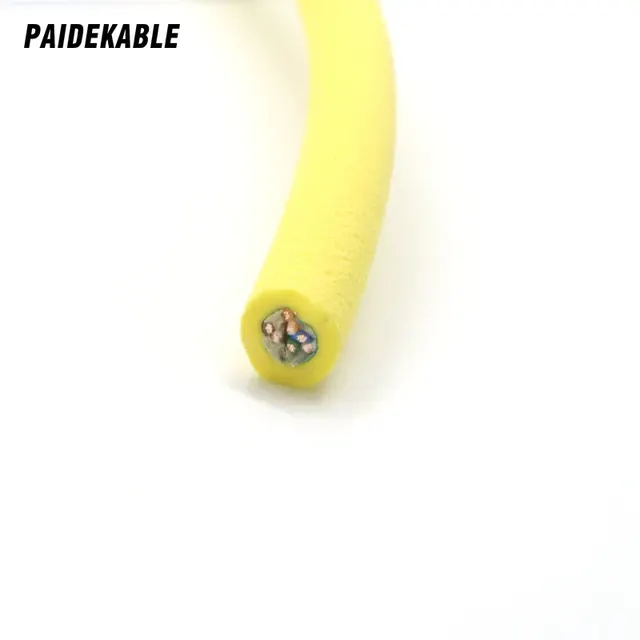 PDK81601-4×2×26AWG
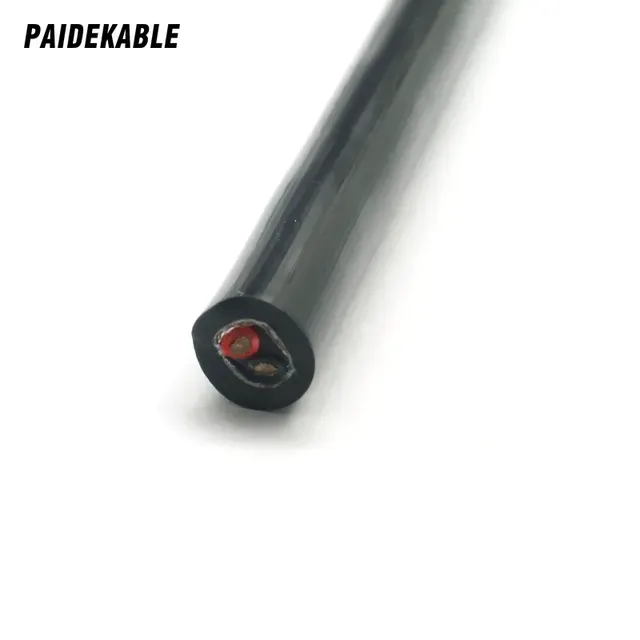 PDK81301-2*1.0
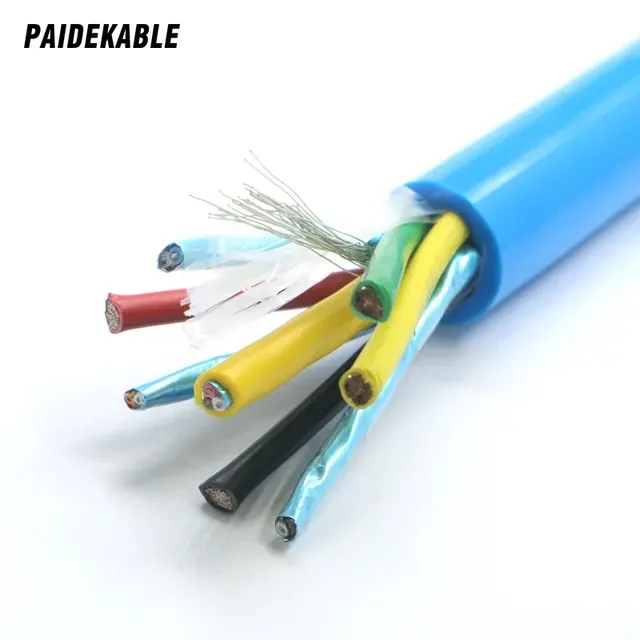 PDK81301-4*2.5+3*2*0.2+1*2*0.2
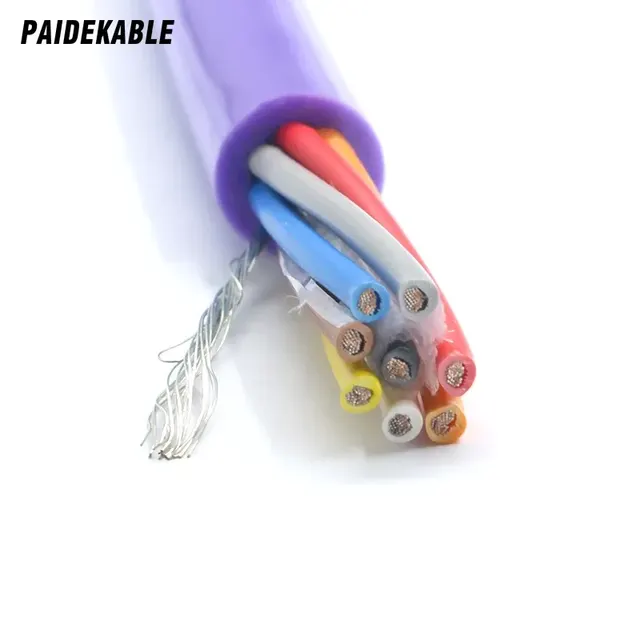 PDK81301-8*0.75
05 — Applications
Specified by the installation.
A cable is chosen by how it is deployed: launched over a sheave, dragged through a pipe, wound on a drum, or twisted in a joint.
ROV & Underwater Intervention
Work-class and observation ROVs run on one line that has to carry power, control, video and sensor data while being launched, towed and recovered. Buo…
Tethered UAV & Aerostat Systems
Continuous flight means ground-supplied power. Every metre of tether adds weight and voltage drop, so the construction is chosen around current, altit…
Offshore Wind & Oil and Gas
Salt water, UV, abrasion and continuous movement. Subsea power and control links for turbines, platforms and subsea production equipment are specified…
Ocean Observation & Sonar
Sensor arrays stay deployed for months and have to keep the noise floor low. Screened pairs, dedicated fibre units and stable dielectric materials pro…
Pipeline & Sewer Inspection
Crawlers work in wet, abrasive and chemically active pipe at diameters that leave little room for the cable. Small diameter, high-density jacket and a…
Elevators & Hoisting
Traveling cables and drum cables operate in one plane, millions of times, inside a shaft or on a drum. Flat construction, flame behaviour and cold fle…
06 — Questions we get asked
Technical, not commercial.
How do I choose between a neutrally buoyant and a standard underwater cable?
What determines the tensile rating of an underwater cable?
Can power, signal and fibre share one cable?
What is the difference between a drag-chain cable and a robot-joint cable?
Talk to engineering
Send the working condition, not a part number.
Depth, load, bend radius, cycle count, temperature, connector type at each end. With those five inputs we can propose a construction sheet within two working days.
Engineering enquiry