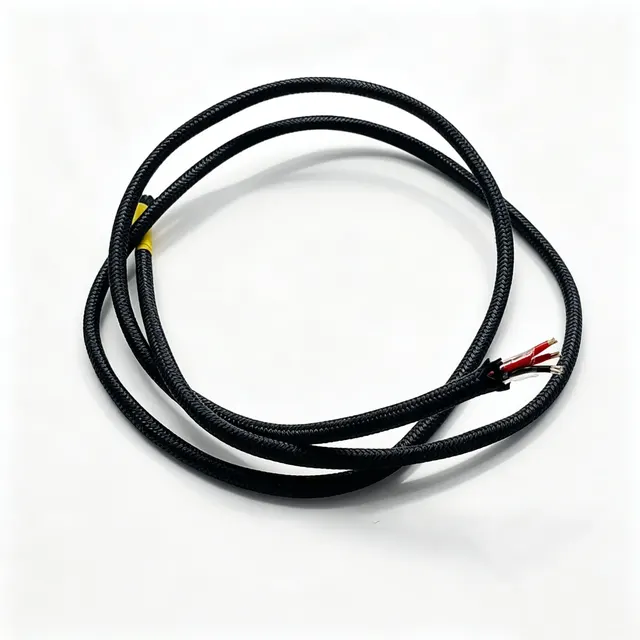
PDK 3×20AWG+2SMF-800KG Tethered Drone and Balloon Cable, OD 6.8 mm
Tethered Drone Cables · Tethered Systems
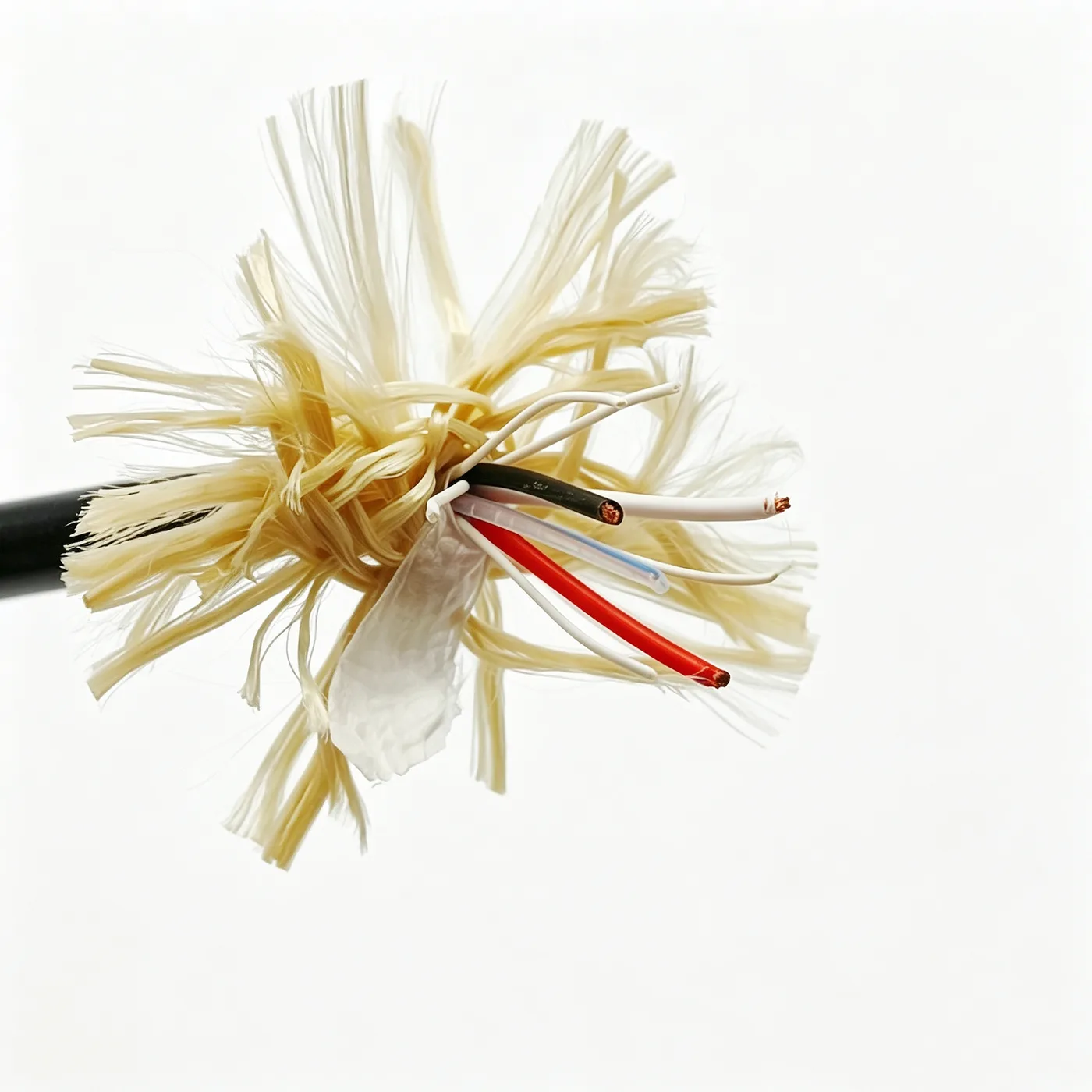
Tethered balloon 3×20AWG+2SMF-800KG
Tethered platform cable with three 0.5 mm² bare copper power cores and two single-mode fibres, LCP braid rated 800 kg, TPU sheath, OD 6.8 mm.
Product overview
Tethered drones and tethered balloons rely on continuous power from the ground, hovering or holding position in the air for long periods, with power, control and data signals all carried by one tether. The conventional approach lays the power line and the fibre separately, so two harnesses coexist, weight and handling difficulty both rise, and the terminations are prone to uneven loading. PAIDE integrates three power cores and two single-mode fibres in one cable, with the strength elements separated from the conducting and communication units, so that one cable carries power, communication and mechanical tensile load at the same time.
The PDK tether series is designed for repeated deployment and long-term outdoor use, and its construction balances three conflicting requirements: low weight, flexibility and tensile strength. The cable does not rely on the copper conductors to carry system load; instead an independent fibre reinforcement layer transfers the pull from the terminations into the cable body, so the copper conductors and fibre always work at low stress, reducing broken cores and rising loss in long-term use.
Construction and materials
Conductor: bare copper strands, 28/0.15 (20AWG, cross-section 0.5 mm²)
- Three power cores, individual wire diameter 0.15 mm, stranded conductor diameter 0.91 mm
- Bare copper has low resistivity, which makes line voltage drop easier to control in long-distance DC supply
Insulation: PE, 0.33 mm thick
- Insulation diameter 1.6 mm; cores are coded black, white and red for phase sequence, which simplifies matching at termination
Fibre unit
- Two single-mode fibres are laid in the same cable as the power cores for control commands and image data return
- The fibre unit is tubed separately to avoid compression during cabling; the joint type can be pre-fabricated to project requirements
Filling and reinforcement
- Five 0.6–0.7 mm PE rods are laid in the cabling gaps so that the core is round and evenly loaded
- Each PE rod contains 1000D LCP fibre, which together with the outer braid forms the load-bearing path
- The outermost layer is a two-layer 3000D LCP fibre braid, 8+8 arrangement, 16 carriers, with about 60% coverage on the inner layer and about 80% on the denser outer layer
- Diameter after braiding 5.2 mm; LCP fibre has high strength and low elongation and is the main strength element of this cable
Cabling and outer sheath
- The three cores and the fibre unit are cabled in a left-hand lay to a cabling diameter of 3.9 ± 0.3 mm, wrapped with non-woven fabric
- Outer sheath: TPU, 0.8 mm thick, black
- Finished outer diameter 6.8 ± 0.3 mm
Key characteristics
Separating strength from conduction is the design principle of this cable. The copper conductors carry current and the LCP braid carries the tensile load; each does its own job, so the pull does not act directly on the copper wires and fibre, residual deformation of the conductors after repeated deployment is smaller and the transmission loss of the fibre is more stable.
The two braid layers become progressively denser from inside to outside: the inner layer binds the core and keeps the cabling from loosening, while the outer layer takes most of the external tensile load and provides abrasion protection. This layered structure balances flexibility and strength better than a single thick braid, and the cable is less likely to develop hard spots when deployed.
The TPU sheath stays elastic at low temperatures and is oil resistant, abrasion resistant and tear resistant, which suits field sites and vehicle- and vessel-mounted platforms. The sheath bonds tightly to the braid, so the sheath and core do not slip against each other during repeated bending and the ends do not crack easily.
Combining power and fibre in one cable reduces the number of harnesses in the system: the winch only has to handle one cable, the number of joints falls and the number of failure points drops accordingly. For an airborne platform, the lighter and more flexible the cable, the easier it is to control winch power and size.
Electrical and mechanical performance
- Core configuration: three power cores and two single-mode fibres
- Rated strength: 800 kg, carried jointly by the LCP fibre braid and the embedded fibres
- Fibre: 2 single-mode cores, suitable for long-distance low-loss signal transmission
- Rated voltage, long-term operating temperature, minimum bending radius and DC conductor resistance: subject to the specification document confirmed by both parties
In practice, bending radius and deployment speed should be set together with the winch, drum and connector matching, avoiding a tight dead bend at the termination and avoiding a small-radius turn while the cable is under tension.
Typical applications
- Power and data return link for long-endurance hovering tethered drones
- Power supply and payload signal transmission for tethered balloon platforms
- Airborne platforms requiring rapid set-up, such as emergency communication relays and temporary base stations
- Long-duration on-station missions such as environmental monitoring, meteorological observation and border patrol
- Airborne systems in research test platforms that require synchronous power and optical transmission
In these scenarios the cable is often deployed repeatedly, and the abrasion resistance of the sheath and the fatigue resistance of the strength layer directly affect the service life of the whole system. Where the site has sharp edges or frequent dragging, guide and protective parts should be added on the outside of the cable.
Selection and customisation notes
Requirements vary widely between tethered platforms, so selection usually starts by confirming several items: the rated pull and safety factor of the platform, supply voltage and current, fibre count and joint type, the drum diameter of the winch, and the temperature and oil conditions of the environment.
PAIDE can adjust the cross-section and number of power cores, the fibre count, the braid configuration, the sheath material and colour per project, and can pre-fabricate connectors and fibre joints at both ends, with continuity and loss testing completed before delivery. Specific construction, length and termination are subject to the specification document confirmed by both parties.
If the existing specification does not match the platform, provide the operating conditions and interface requirements and our engineers will propose a construction and an alternative.
Related in Tethered Drone Cables
Engineering enquiry