2×20AWG Tethered Drone Cable, FEP Insulated, 5–7 A, 15.6 g/m
Tethered Drone Cables · Tethered Systems
2×20AWG
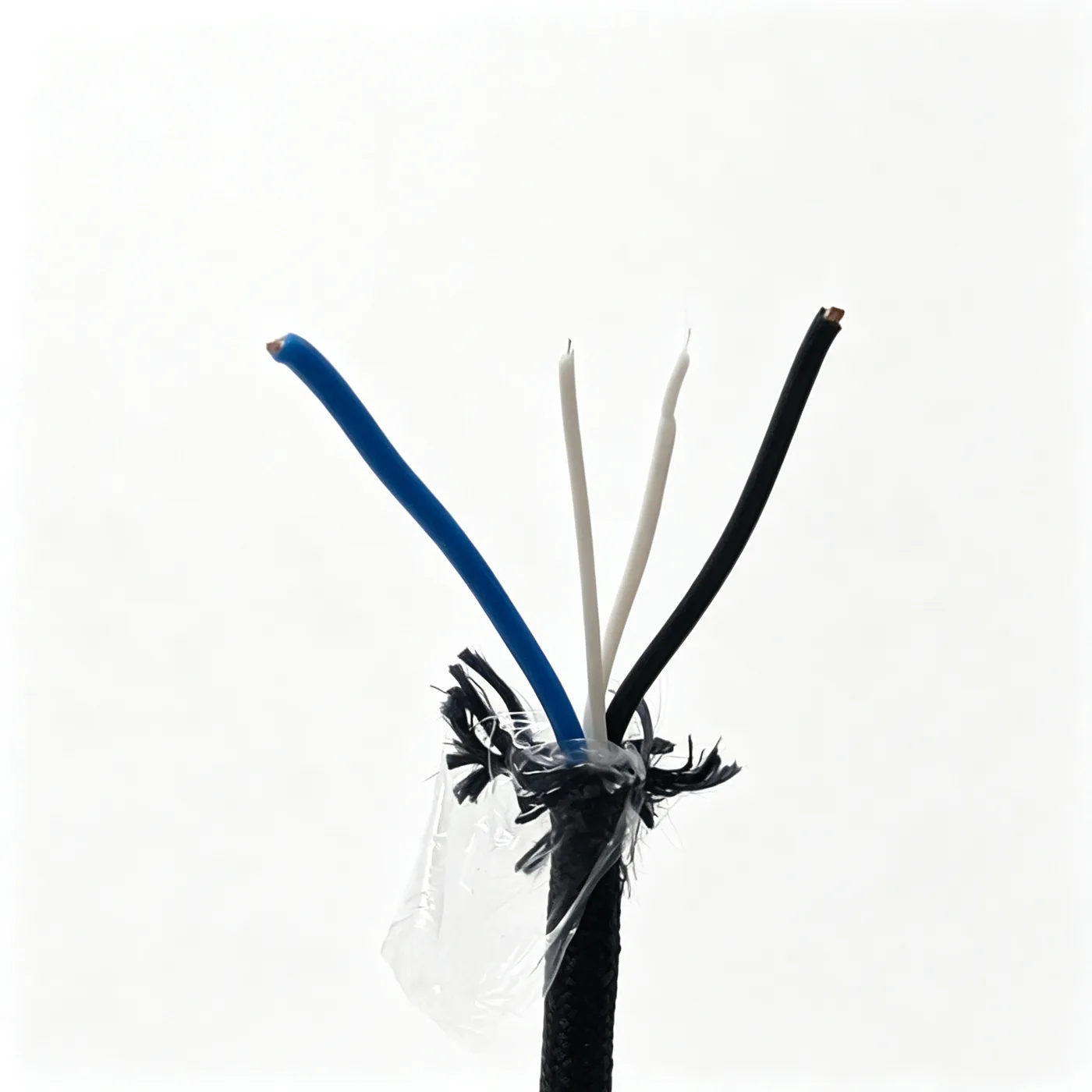
Lightweight two-core 20AWG tethered drone cable with FEP insulation, PE fillers and a 16-carrier high-strength fibre braid, rated 5–7 A continuous.
Product overview
The 2×20AWG tethered drone cable is a lightweight two-core cable developed for power supply on tethered drones and tethered aerostat platforms. It carries power continuously between the ground supply and the airborne platform and balances current capacity, flexibility and abrasion resistance over long endurance flights. The two insulated cores are clearly split by function and are normally coloured red and black to mark polarity, which simplifies identification and connection on site; the permitted continuous current meets the normal demand of the ground supply circuit on such platforms.
Tethered equipment puts the cable under a combined duty of "power on, suspended and repeatedly paid out and recovered": it has to deliver energy steadily and at the same time withstand its own weight, wind load and repeated bending by the handling mechanism. The construction therefore follows three main lines — light weight, roundness and tensile strength — and solves conduction, insulation, cabling and load carrying layer by layer.
Construction and materials
- Conductor: two independent cores form the two-core construction, with the conductor size as given by the AWG designation in the model; the specific conductor material and stranding are subject to the specification document confirmed by both parties.
- Insulation: extruded FEP, insulated core diameter 1.35 ± 0.03 mm. FEP has stable dielectric properties and low water absorption, so dimensions and electrical characteristics vary little with temperature or humidity, which suits long-term outdoor and high-altitude use; its smooth surface and low friction coefficient also help the cable pass smoothly through the handling mechanism.
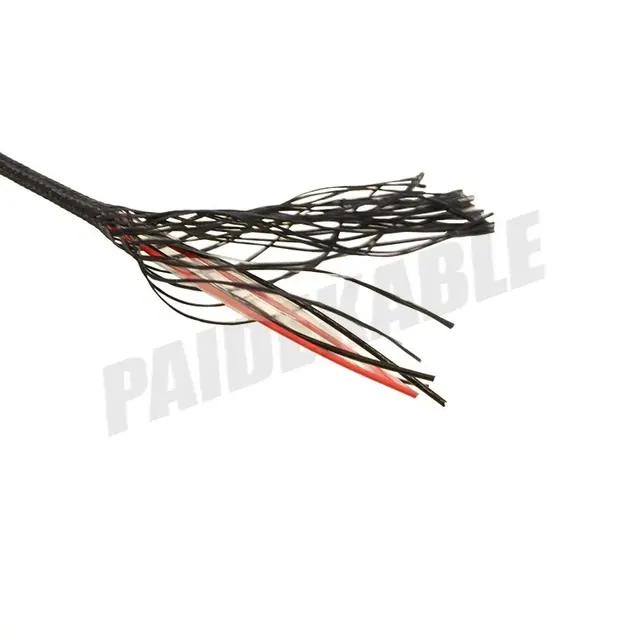
- Cabling: the two cores are cabled with a left-hand lay to a cabled diameter of 2.7 ± 0.1 mm; two 0.7–0.8 mm transparent PE rods are added as fillers so that the core section is rounder and does not collapse under pressure. Polyester tape is wrapped over the cabling to isolate and fix it, preventing the outer braid wires from pressing directly into the insulation.
- Reinforcement braid: the outermost layer is a black high-strength fibre braid, 800D per strand, arranged 8+8 in 16 carriers, with coverage of about 98% (adjusted to the actual density). This layer carries the main tensile load, raising tensile strength and resistance to repeated bending, and also provides an outer defence against abrasion, cutting and UV. After braiding the cable diameter is 3.1 ± 0.15 mm.
Design points
- Lay direction and tension: the two cores are laid left-hand, and lay direction and pay-off tension must be matched so that the cores keep a stable relative position after cabling and do not shift or cross in service.
- Filling and wrapping: the transparent PE fillers solve the out-of-round section that follows two-core cabling; the polyester tape binds fillers and cores into one unit, which gives better consistency of cabled diameter.
- Braid coverage control: at a given carrier count the high-strength fibre braid reaches a high coverage. Too low and mechanical protection is insufficient; too high and the cable stiffens and pay-out resistance rises, so production adjusts to the actual density.
- Layer-by-layer diameter control: the tolerances of insulated core, cabled core and braided diameter are controlled at each stage, which eases matching with connectors, clamps and handling accessories.
- Load path: the outer braid takes the main tensile load, while conductors and insulation handle conduction and isolation respectively, so the conductive parts do not carry the full external force when the cable is under tension.
Key features
- Light weight: in a two-core small-size construction the weight per unit length is low, which leaves more of the drone's payload and endurance available and reduces the load on the winch.
- Flexible and durable: FEP insulation combined with the high-strength fibre braid gives a cable that is supple yet strong in tension, suited to repeated pay-out, coiling and passage over pulley mechanisms.
- Round and stable: the transparent PE fillers and polyester tape keep the core round with consistent cabled diameter, which eases fitting of connectors, clamps and handling gear.
- Clear identification: red and black insulation makes polarity easy to distinguish and reduces wiring errors on site.
- Outer protection: the braid also provides abrasion, cut and UV resistance for long-term outdoor and high-altitude use.
Electrical and mechanical performance
- Current rating: set by specification for continuous carrying of 5–7 A.
- Weight per unit length: about 15.6 g/m, light for a two-core construction of this kind.
Apart from these two figures, rated voltage, operating temperature range, minimum bending radius and DC resistance vary with service conditions and can be confirmed separately per project. Construction and dimensional parameters are listed together in the construction and materials section and are not repeated here.
Typical applications
- Ground power link for tethered drone platforms, providing continuous power for long endurance flights.
- Low- and medium-voltage power transmission for tethered aerostats, tethered balloons and similar airborne platforms.
- Emergency communication relays, disaster site lighting, aerial surveillance and inspection, where power is needed continuously for long periods.
- Internal connections in small electromechanical and avionic equipment that is weight-sensitive and has to be paid out repeatedly in confined spaces.
Use and maintenance
- During pay-out and recovery keep the direction of cable load aligned with the winch exit direction, so that sustained side loading does not wear the braid locally.
- Check the outer braid regularly for fuzzing, broken strands or concentrated wear, and deal with anything abnormal promptly so that the insulation underneath is not affected.
- Provide strain relief at crimped or soldered connector joints so that pull does not act directly on the conductors.
- In storage, avoid prolonged direct sun, oil contamination and pressure from sharp objects, and keep the coiling diameter within a reasonable range.
- If the cable becomes locally stiff, changes noticeably in diameter or feels abnormal when bent, stop using it and check the internal construction rather than continuing to power it in a damaged state.
Selection and customisation
- For higher current, a larger section or higher core count within the same series can be selected; where data has to be carried at the same time, an optical fibre unit or signal cores can be added to form an electro-optical hybrid cable.
- Core colours, diameter tolerances, braid coverage and appearance can be customised to project requirements, together with connectors, break-out arrangement and delivery lengths.
- Use pulleys and clamps matched to the cable diameter at installation, avoid local over-bending or prolonged rubbing against sharp edges, and keep tension steady in the handling mechanism to extend braid life.
- Specific electrical parameters, environmental performance figures and acceptance methods are subject to the specification document confirmed by both parties.
Related in Tethered Drone Cables
Engineering enquiry